
Vitex
Vitex agnus-castus
Other Common Names: Texas Lilac, Hemp Tree, Sage Tree, Indian Spice, Chaste Tree

General Information
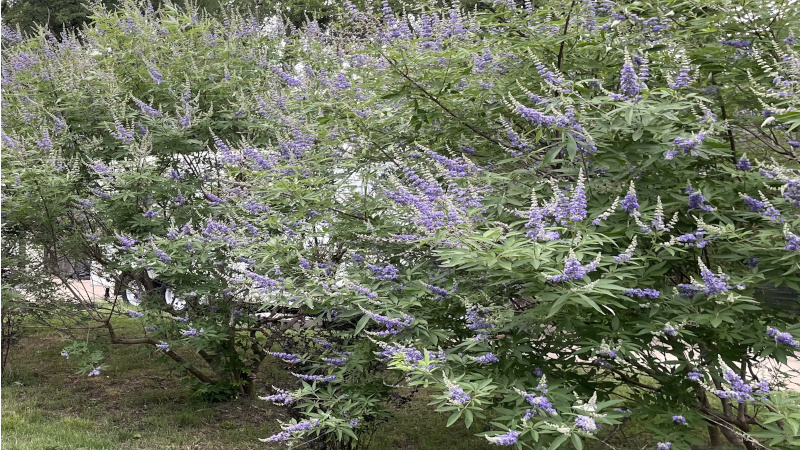
A favorite in Texas gardens, the Texas Vitex grows quickly and offers easy maintenance. Although thought to be a native of China, India and Southern Europe, it has been cultivated in North America for over 300 years. North Texas gardeners enjoy this Texas Superstar Plant as either a large shrub or small tree; it works well in xeriscape gardens.
Plant Care
Propagate Vitex from seeds or cuttings. Transplant volunteer seedlings elsewhere in the yard. Vitex grows best in full sun. Once established, Vitex requires only a little supplemental water every week or two depending on rainfall. Accepts a wide range of soil conditions. Fertilize at planting time and each spring. Trim in late winter to early spring. Prune before foliage emerges in the spring.
Pests and Diseases
- None
Warnings
- Sap may be an irritant and can cause blisters. According to Texas Natives.org, this plant can be invasive.
Characteristics
Hardiness Zones:7-10
Heat Tolerance:High
Mature Height:15'
Mature Width:15'
Flowers:Spikes of lavender blooms
Bloom Time:May to September, heavy through summer and sporadically through fall
Leaves:Palmate, compound leaves with 5 to 7 leaflets. Spicy fragrance when crushed. Fall color is yellow
Sources / Additional Information
- Missouri Botanical Garden: Vitex agnus-castus
- TAMU Earth-Kind Landscaping: Chaste Tree
- Texas Superstar: Vitex, Texas Lilac, or Chaste Tree