
Frostweed
Verbesina virginica
General Information
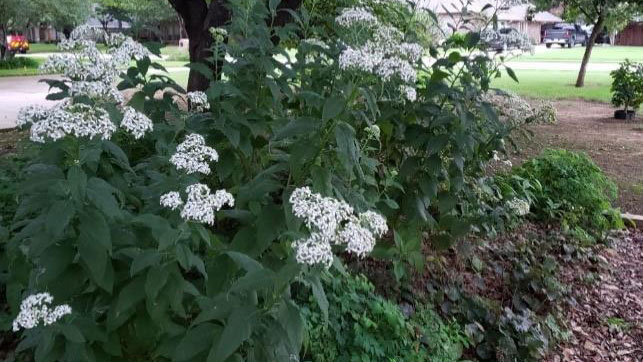
Frostweed will grow in full sun, partial shade, or full shade and it requires a small amount of water to be happy. Like most wildflowers, it needs very little care. Riverbanks, open woodlands, and shaded woods are its natural habitat, however, and copying these conditions will produce the happiest plants.
The large clusters of white flower blooms appear in August and September and are usually covered with bees and butterflies. The foliage is a larval host for the Summer Azure, Bordered Patch, and Silvery Checkerspot butterflies.
Plant Care
Trim back by at least one third in June to encourage a fuller plant and more autumn blooms. It is deciduous, but the largish, dark green leaves grow up an interesting stem that has fleshy wing-like flanges running the length of the stem. These are crucial to frostweed’s special winter feature (Crystallofolia). The stems grow straight up and remain unbranched until the flower heads appear in late summer.
It is easy to propagate frostweed by digging and dividing the rhizomes in winter when the plant is dormant. You can also allow the seed heads to dry on the plant after the flowers have faded. Then remove them and collect the seeds.
Pests and Diseases
- None
Warnings
- Can be very dominant where planted.